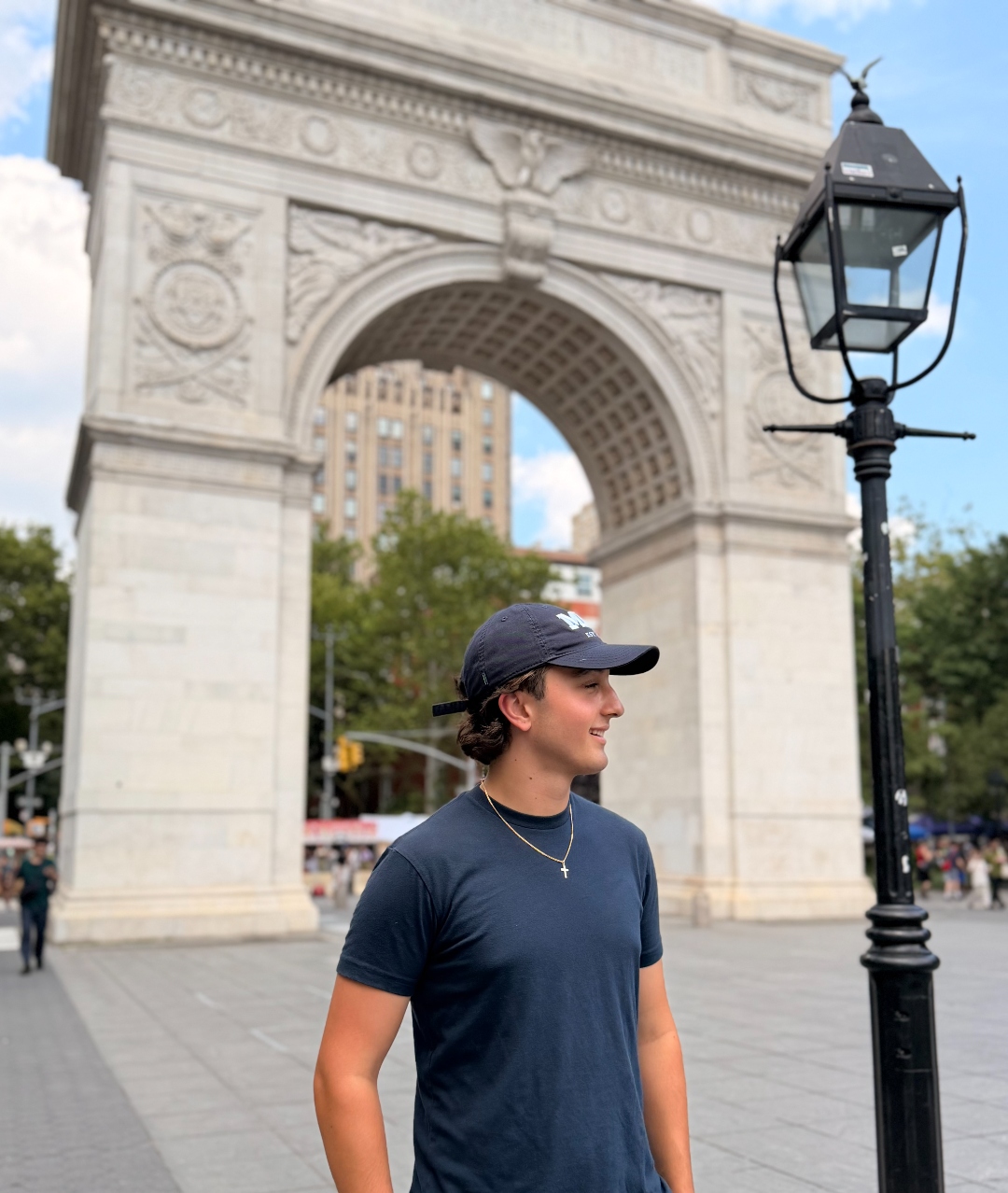
Christian Azaret
Christian Azaret, Class of 2028 Parkland, Fl American Heritage School, Plantation
Hi, I'm Christian Azaret, a high school student with a expanding interest in biomedical engineering, medicine, and orthopedic innovation.
I created this blog as both a personal learning project and a way to share what I discover with other students, parents, and anyone interested in the rapidly evolving field of biomedical engineering. My goal is not simply to summarize information that already exists, but to explore how biomedical engineering is actually practiced, how ideas move from laboratories and engineering workspaces into hospitals, operating rooms, medical devices, and ultimately patient care.
My interest in biomedical engineering developed from a fascination with science and medicine, combined with an equally strong desire to understand how things work, how they can be built, and how new designs can solve real problems. I am especially drawn to the process of identifying a need, breaking the problem down, testing possible solutions, and then creating or improving a device, system, or technology that can make something function better. I have always been interested not only in understanding how the human body works, but also in asking how technology can restore function when something goes wrong. Biomedical engineering sits at that intersection, combining biology, physics, engineering, computer science, materials science, and medicine to solve problems that are often both technically complex and deeply human.
My interest in orthopedics became more personal in ninth grade, when I tore my ulnar collateral ligament—the injury every pitcher dreads. Experiencing the process of diagnosis, surgery, and rehabilitation firsthand introduced me to orthopedic medicine not only as a student interested in science, but as an athlete and patient. That experience sparked a much deeper curiosity about biomechanics, sports injuries, surgical repair, implant design, and the technologies used to restore stability, movement, and function. It also made me begin thinking more seriously about how engineering can be used to solve practical problems in medicine and improve the way injuries are treated.
That curiosity eventually led me into the operating room.
During the past summer, I spent several weeks shadowing orthopedic surgeons for approximately eight hours a day, giving me the opportunity to observe multiple procedures from beginning to end rather than seeing only isolated portions of surgery. The amount of time I spent in the OR allowed me to begin appreciating the extraordinary degree of planning, precision, engineering, and coordination that orthopedic surgery requires.
Nearly every procedure involved some combination of careful anatomical measurement, mechanical alignment, specialized instrumentation, implant selection, imaging, computer-assisted planning, or robotic technology. I watched surgeons work with precision saws, drills, guides, protective equipment, fixation systems, and implants that had to be selected in exact dimensions for an individual patient. I also saw medical-device representatives, including representatives from companies such as Stryker, present in the operating room and working alongside the surgical team to support highly specialized instrumentation and implant systems.
Technologies such as the MAKO robotic platform made the relationship between engineering and surgery particularly striking. Watching a procedure in which anatomy could be mapped, measurements calculated, implant positioning planned, and surgical execution assisted by sophisticated technology made biomedical engineering feel much less like an abstract academic discipline and much more like an active part of modern medicine.
Those experiences have made me especially interested in orthopedic biomedical engineering, including biomechanics, implant design, surgical robotics, biomaterials, fracture fixation, prosthetics, and technologies that may improve healing or restore function.
My interest in building and experimentation has developed alongside my interest in medicine. Working with a friend whose primary interests are in computer science, I have experimented with building robotic-arm systems capable of performing fine-motor tasks. We worked on programming the arm to reproduce specific movements and then explored methods of using artificial intelligence to train the system based on movements and techniques that I demonstrated. Projects like these have introduced me to some of the challenges involved in translating human movement into mechanical systems including precision, feedback, repeatability, programming, and machine learning — and have made me increasingly interested in applications ranging from surgical robotics to advanced prosthetics.
Over the past year, I have begun reaching out directly to researchers at different universities whose work spans several areas of biomedical engineering. I have been interested in learning what questions researchers are currently asking, how undergraduate and graduate students become involved in laboratory work, and what emerging areas of research may ultimately translate into new medical technologies. These conversations and outreach efforts have exposed me to the enormous range of the field from biomechanics and regenerative medicine to neuroscience, rehabilitation engineering, medical devices, robotics, and biomaterials.
This summer, I also had the opportunity to visit several leading universities and explore their engineering and bioengineering programs firsthand. Seeing laboratories, research centers, engineering facilities, and different academic approaches helped me recognize that there is no single version of biomedical engineering. Different universities emphasize different combinations of engineering, medicine, computation, design, entrepreneurship, and research.
One part of this blog will therefore examine the universities I have visited in greater depth, not as a ranking, but from the perspective of a student trying to understand what distinguishes one biomedical engineering program from another. I plan to discuss the research being conducted at each institution, opportunities available to undergraduate students, facilities and laboratories, interdisciplinary programs, and the aspects of each school that stood out to me during my visits.
I also hope this blog becomes more than something I write by myself.
As it develops, I plan to conduct podcast-style interviews with biomedical engineers, physicians, researchers, medical-device professionals, and others working at the intersection of engineering and medicine. I am particularly interested in hearing how people entered the field, what problems they are currently trying to solve, how their work has evolved, and what advice they would give students who are only beginning to explore biomedical engineering.
Ultimately, this blog is meant to document my process of discovery.
I am still a student, and that is precisely the point. I want to investigate questions without knowing the answers, speak with people who know far more than I do, build things that may or may not work the first time, visit laboratories and universities, examine emerging technologies, and gradually develop a more sophisticated understanding of what biomedical engineering can accomplish.
Topics will include orthopedic engineering, biomechanics, surgical robotics, artificial intelligence, medical devices, biomaterials, prosthetics, tissue engineering, regenerative medicine, neuroscience, and emerging technologies, along with my own projects, research experiences, university visits, and conversations with people working in the field.
For other students who are curious about biomedical engineering but may not yet know exactly what the field encompasses, I hope this site can serve as a place to begin exploring.
And as my own understanding develops, I hope the blog develops with it.
Christian Azaret
September 15, 2026